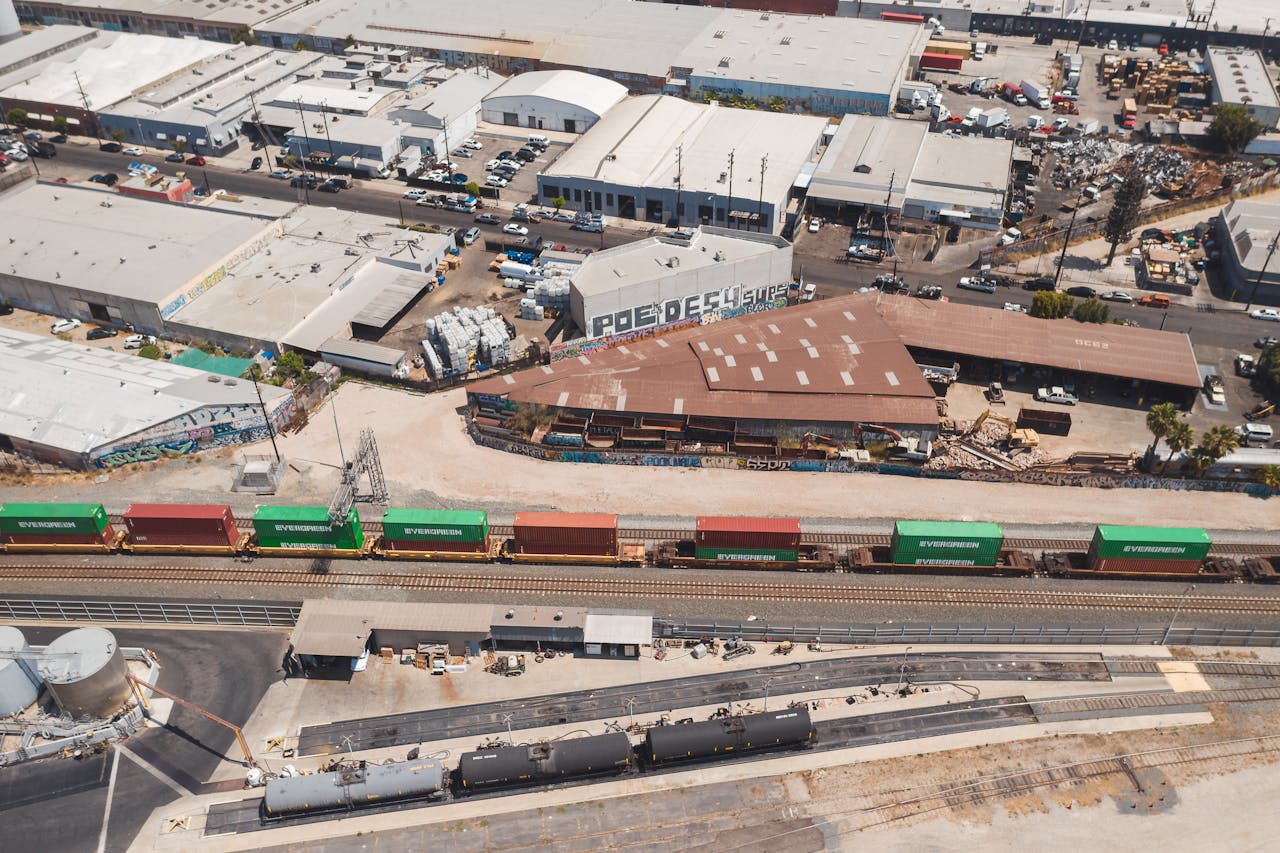
The international economic and commercial environment continues to influence corporate investment and expansion decisions, particularly within industrial markets linked to North American supply chains. In Mexico, uncertainty surrounding the trade relationship with the United States, the review of the USMCA (T-MEC), and shifts in tariff policies have led companies to approach their growth plans with greater caution. This context presents a challenge for Tijuana, whose industrial activity is closely tied to cross-border trade.
By the end of the third quarter of 2026, Tijuana recorded a gross absorption of over 100,000 square meters—a 20% decrease compared to the same period in 2025. More than 15 transactions were finalized during the quarter; nearly 90% of these involved spaces smaller than 10,000 square meters, driven primarily by the logistics sector.
Of interest: Industrial Report: Solili | Third Quarter 2026
The historical trend of industrial vacancy in Tijuana reflects a significant shift in market conditions. Prior to the pandemic, the vacancy rate hovered around 3.5% before gradually declining to below 1% between 2021 and 2022—a period marked by strong demand and limited availability. Throughout 2023, the rate remained below that threshold, but starting in 2024, it began to rise due to the addition of new space, a slowdown in leasing activity, and an increase in space being vacated by tenants. This trend intensified during 2025 and persisted throughout 2026, with the vacancy rate rising consistently to reach 10.2% by the end of the third quarter—the highest level recorded in the historical data analyzed.
At the close of the third quarter of 2026, Tijuana recorded over 1 million square meters of vacant space distributed across 106 properties. This vacancy is concentrated primarily in the El Florido-Boulevard 2000 submarket, with nearly 600,000 square meters, followed by Otay-Alamar with 155,000 square meters, and Pacífico-Nordika with 145,000 square meters. By category, Class A properties account for 77% of Tijuana’s vacant space, while Class B represents 17% and Class C accounts for 6%.
In the third quarter of the year, the El Lago industrial submarket recorded the highest average rent at $10.76 USD/m²/month, followed by Otay-Alamar at $9.13 USD/m²/month. In contrast, the Insurgentes-El Águila submarket showed the lowest average, at $7.36 USD/m²/month. Citywide, the average rent stands at $8.68 USD/m²/month—13% above the national average and virtually unchanged from the third quarter of 2025. The stability of rental prices, despite rising vacancy, reflects increased competition among property owners to lease out available space.
See also: Mexicali doubles its industrial leasing activity, with over 50,000 m² recorded during July–August.
At the end of the third quarter of 2026, the amount of industrial space under construction in Tijuana totaled more than 240,000 square meters—a 40% decrease compared to the same period in 2025. Meanwhile, the start of new construction projects has slowed due to the abundant supply; between January and September 2026, new construction totaled 460,000 square meters, 38% less than in the same period the previous year.
Tijuana faces significant challenges due to rising vacancy rates and a slowdown in construction activity; however, it offers a diversified industrial portfolio capable of meeting the needs of companies of various sizes and sectors. Its strategic location and proximity to the United States make the market a key hub for cross-border operations and North American supply chains. In this context, the implementation of the USMCA (T-MEC) is expected to help reduce trade-related uncertainty and foster a gradual improvement in industrial performance indicators.
Stay up to date with the most important news to the real estate
Subscribe Solili Newsletter