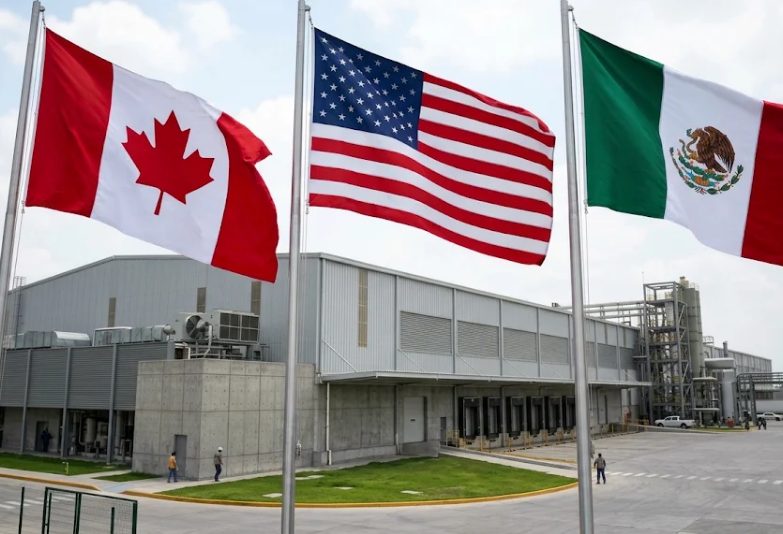
Ciudad Juárez’s industrial market is going through a period of moderation, influenced by an international trade environment that has heightened caution among manufacturing companies. The economic relationship with the United States, changes in tariff policies, and the upcoming renegotiation of the agreement between Mexico, the United States, and Canada (USMCA) have created greater challenges for companies operating in this border city, particularly in their production and distribution costs. These conditions have affected decisions on expansion and the leasing of industrial space, limiting the momentum that characterized the market in previous years.
The composition of demand in Ciudad Juárez largely explains its sensitivity to these changes. The city’s industrial activity maintains a significant share of manufacturing companies, whose occupancy plans are closely tied to the performance of foreign trade and supply chains. In this context, uncertainty over trade conditions has led companies to evaluate their space needs and expansion projects more carefully.
Of interest: Industrial Report: Solili | October 2026
During the first three quarters of 2026, industrial demand in Ciudad Juárez accumulated just over 200,000 square meters, maintaining relatively stable performance compared to levels recorded over the previous two years. However, this volume remains below the market’s all-time peak, observed during the pandemic, when absorption exceeded 600,000 square meters.
The momentum reached during the health crisis was related to changes in supply chains and the strengthening of manufacturing and logistics activities in Mexico. The relocation of operations and the search for greater proximity to the U.S. market particularly benefited border cities, including Ciudad Juárez, which saw increased activity from companies linked to international trade.
Meanwhile, the stability of recent demand has helped maintain relatively balanced conditions in the availability of industrial space. This performance has also been accompanied by lower construction activity, given the need to place existing space before adding new projects. Uncertainty over trade and tariff conditions has reinforced this cautious stance among developers, who during 2026 have moderated the start of new construction in line with the pace of leasing observed in the market.
Check here: Oversupply or New Opportunity? Tijuana’s Industrial Vacancy Tops 10%
Looking ahead to the close of 2026, the evolution of Ciudad Juárez’s industrial market will be tied both to the closing of new negotiations and lease agreements and to the progress of talks on the USMCA renegotiation and the definition of trade conditions with the United States. Greater demand momentum would strengthen absorption levels and improve occupancy prospects for the coming months. In turn, a sustained recovery in leasing activity and greater clarity about the future of the trade agreement could create more favorable conditions to reactivate construction starts, provided that the development of new space responds to market needs.
Stay up to date with the most important news to the real estate
Subscribe Solili Newsletter