The fourth quarter of 2025 is framed within a period of adjustment for the national economy, with a moderate growth rate and a more cautious approach to investment decisions. This context has led companies to rethink their expansion plans. At the same time, the reconfiguration of supply chains continues to drive the relocation of production processes, which maintains Mexico as a strategic destination for manufacturing and logistics activities, albeit under increasingly selective criteria.
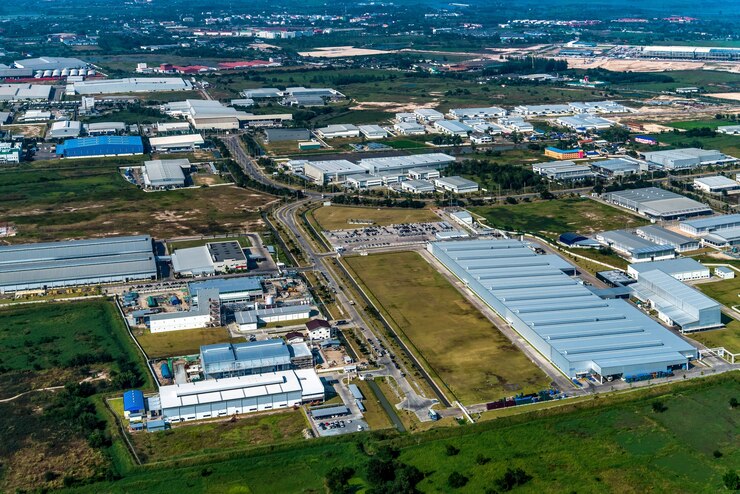
Against this backdrop, the industrial inventory in Mexico reached 111 million square meters at the end of the last quarter of 2025, representing a 7% year-over-year increase. During the quarter, 67 buildings were completed and added to the national industrial inventory, generating over 1.5 million square meters of new supply.

The markets that registered the largest increases in their inventory were Monterrey, with 535,000 square meters of new supply, followed by Mexico City with 275,000 square meters and Guadalajara with 214,000 square meters, consolidating their position as the main drivers of industrial inventory growth nationwide.
Nationwide industrial vacancy closed the year with more than 5 million square meters available, representing an annual increase of nearly 2 million square meters. This increase in industrial supply is primarily due to the higher number of move outs registered throughout the year, as well as the addition of new buildings to the inventory with currently available space.
At the end of Q4 2025, the national industrial vacancy rate stood at 4.6%. While this level is considered healthy overall, some markets are already showing high rates. Tijuana stands out, registering the highest vacancy rate nationwide at 8.1%, followed by Mexicali and Querétaro at 6.2% and 6.1%, respectively. In contrast, the markets with the lowest vacancy rates are Aguascalientes and Puebla, both at 1.5%, followed by Mexico City at 2.2%.

Despite the commercial challenges the real estate market faced throughout 2025, industrial leasing activity closed the year with a solid performance. During the fourth quarter of 2025, industrial demand reached 1.7 million square meters, representing a 37% increase compared to the same period of the previous year.
Industrial investments made during the fourth quarter of 2025 were concentrated in the country's main markets. Mexico City stood out, leading the way with 35% of the occupied space, followed by Monterrey with 15% and Guadalajara with 9% of the total.
Cumulative industrial demand throughout 2025 reached 5.4 million square meters. However, this result reflects a 13% year-over-year contraction, highlighting the adjustment in the pace of industrial investments compared to the previous year.

Industrial construction activity in Mexico reached approximately 4.2 million square meters by the end of Q4 2025, 1.4 million square meters less than in the same quarter of the previous year. Construction sites are primarily located in the Monterrey and Mexico City markets, which together account for half of the national construction activity.
Construction starts during the quarter totaled 1.4 million square meters across 45 buildings under development. The capital city accounted for the largest share of new projects, representing 34% of construction starts, followed by Monterrey and Guadalajara with 23% and 10%, respectively.
The average national industrial rental price closed December at $7.34 USD per square meter per month, representing a 5% increase compared to the end of 2014. Mexico City and Tijuana continue to have the highest rates, at $9.98 and $8.68 USD per square meter per month, respectively. In contrast, Guanajuato and San Luis Potosí offer the most competitive rents in the country, at $5.05 and $5.62 USD per square meter per month, respectively.

Looking ahead to 2026, the environment points to a more balanced period, where demand will be closely linked to project quality, strategic location, and the ability to meet increasingly specific operational requirements. While the pace of construction has slowed, demand remains strong, and the sector maintains favorable expectations for the coming year, in a context that will demand careful planning and a supply increasingly aligned with the new market conditions.
Stay up to date with the most important news to the real estate
Subscribe Solili Newsletter