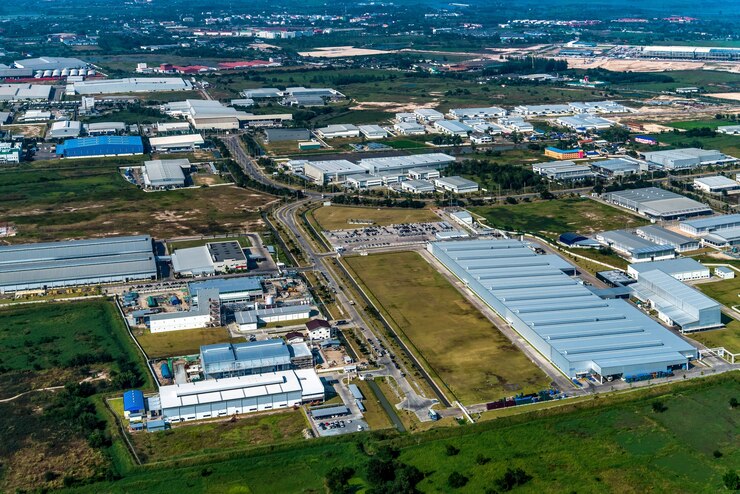
At the close of the second quarter of 2026, Mexico’s industrial real estate market continues to show signs of repositioning toward a more strategic selection of assets, with clear indications of consolidation and market maturity. This trend is reflected in Fibra MTY’s acquisition of Fibra Macquarie.
From a macroeconomic perspective, Mexico’s GDP is projected to grow by 1.6% by the end of 2026. Meanwhile, the 4.8% inflation rate recorded during the first half of the year has remained a key factor in monetary policy decisions. In this context, at the end of June, Banco de México kept its benchmark interest rate unchanged at 6.5%, extending the pause in its restrictive monetary policy cycle.
The moderation in nationwide leasing activity reflects a market seeking equilibrium amid the beginning of the review of the United States–Mexico–Canada Agreement (USMCA), scheduled to start on July 1, 2026. During the second quarter, investors and developers closely monitored the direction of this process while continuing to pursue opportunities in selected markets. As a result, new project starts slowed and the pace of new supply entering the market declined, reinforcing the current environment of caution.

The national industrial inventory reached 113.66 million square meters at the end of June, representing an annual increase of 5.3%. Monterrey remained the country’s largest industrial market, surpassing 21.5 million square meters after adding 1.8 million square meters over the past year. At the same time, the geographic distribution of industrial stock across the country continues to expand, reinforcing an increasingly institutional market profile that is attracting new investors seeking to strengthen their presence in Mexico.
Mexico’s industrial vacancy rate closed Q2 2026 at 5.2%, increasing by 1.3 percentage points over the past year. Vacancy remains a key focus for owners and developers, who are adopting more flexible leasing conditions to benefit tenants seeking industrial space across the country.
Tijuana posted the highest industrial vacancy rate nationwide at 9.7%, equivalent to approximately one million square meters of available space. However, despite this abundant supply from both institutional and local developers, the market has maintained stable rental rates while continuing to experience healthy leasing activity.

Nationwide industrial leasing totaled 1.263 million square meters by the end of Q2 2026, representing a 35% increase compared to the same period in 2025. Monterrey accounted for the largest share of leasing activity during the quarter with 24% of total demand, followed by Mexico City with 22%. Tijuana stood out by climbing to third place, capturing 11% of national leasing activity.
Industrial construction nationwide exceeded 3.8 million square meters, with nearly half of the total concentrated in Mexico City. Monterrey followed with 932,000 square meters under development, while Guadalajara recorded 340,000 square meters under construction.
The eight industrial markets that make up northern Mexico accounted for 35% of all construction starts, a figure similar to that recorded during Q2 2025. Meanwhile, in the Bajío and western regions of the country, construction began on 14 industrial projects totaling 247,000 square meters, including six new developments in Guadalajara.

Despite the current environment, rental rates have continued to rise. Mexico City closed the second quarter with average asking rents exceeding US$10.38 per square meter per month, representing an 8% increase compared to the same period last year.
The nation’s capital continues to attract investors and developers expanding into new industrial corridors, creating higher-quality inventory where rental rates reflect more efficient buildings designed to accommodate larger-scale logistics operations. These improvements are also reflected in higher construction costs and, consequently, higher rental prices.
In northern Mexico, Tijuana and Tecate continued to post the region’s highest rental rates at US$8.68 and US$8.06 per square meter per month, respectively. Monterrey, currently the country’s largest industrial market, recorded an average asking rent of US$7.08 per square meter per month.

After the first half of 2026, participants in Mexico’s industrial real estate market have demonstrated stronger collaboration, helping redefine the country’s industrial landscape and fostering a more strategic and consolidated market environment.
On the demand side, industrial occupiers are increasingly focused on optimizing their operations, shaping the requirements of newly developed facilities. Site selection criteria have become increasingly technology-driven, influencing both construction processes and the design of the final product.
The overall increase in vacancy rates has encouraged a more cautious approach toward launching new construction projects. This trend was evident across most markets during the quarter, with the notable exceptions of Mexico City and Guanajuato.
Looking ahead to the remainder of 2026, as Mexico’s trade relationship with the United States gains greater clarity, the country’s most competitive industrial properties are expected to attract tenants seeking to continue expanding their operations into Mexico.
Stay up to date with the most important news to the real estate
Subscribe Solili Newsletter