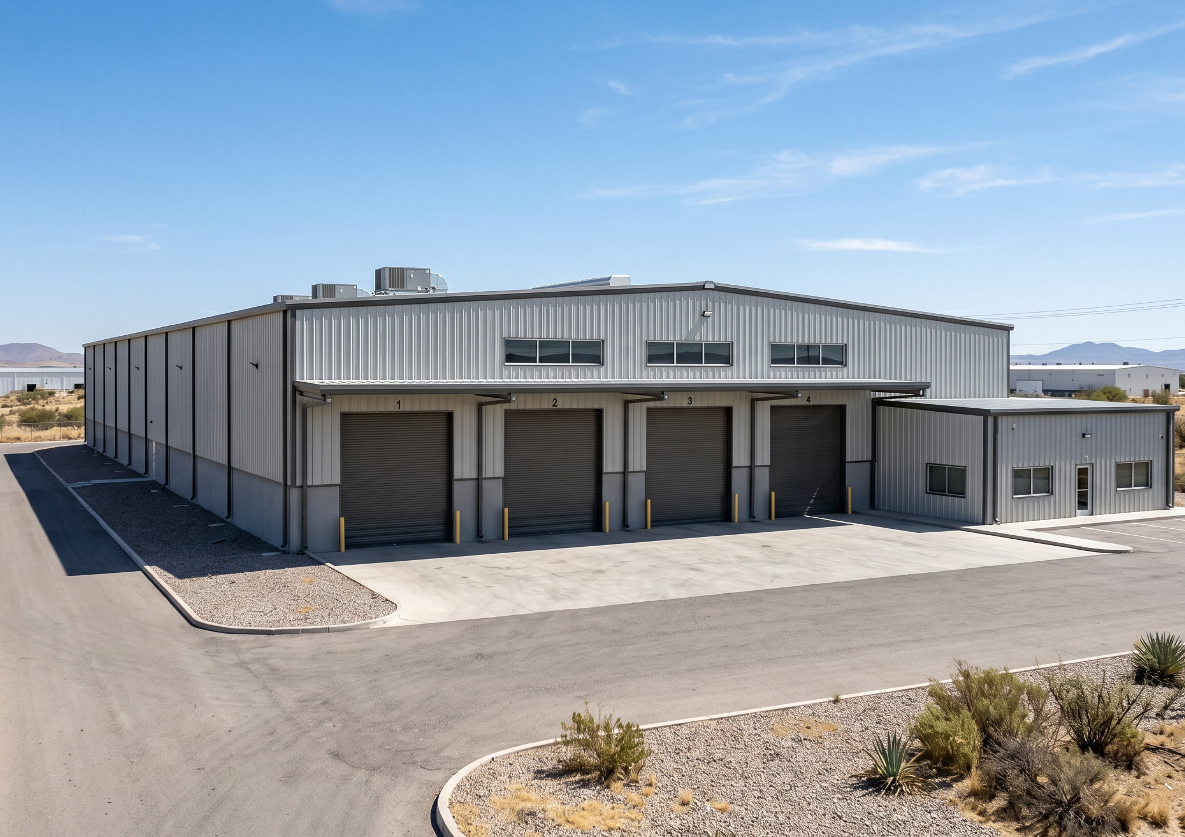
The international economic and trade environment continues to influence corporate investment and expansion decisions, particularly in industrial markets linked to North American supply chains. In Mexico, uncertainty regarding the trade relationship with the United States has led companies to evaluate their growth plans more cautiously. Against this backdrop, Monterrey retains its status as one of the country's key industrial markets, even as it faces adjustments in the pace of demand and increased space availability.
Of Interest: Industrial Report: Solili | September 2026
During the third quarter of 2026, gross industrial absorption in Monterrey reached approximately 220,000 square meters, a 30% decrease compared to the same period in 2025. Despite this year-over-year decline, demand remains above pre-pandemic levels. Seventeen transactions were finalized during the quarter; the majority involved speculative facilities, while only one—a build-to-suit project for LEGO—stood out as the most significant deal, involving the lease of 49,000 square meters in Ciénega de Flores. By corridor, Ciénega de Flores accounted for approximately 34% of the quarter's industrial demand, followed by Apodaca with nearly 27%.
Industrial vacancy in Monterrey has shown a sustained increase since early 2024, when the rate stood below 1%. Since then, the indicator has trended upward, driven by the addition of projects with available space to the inventory and a demand that, while still significant, has seen its growth pace moderate. At the close of the third quarter of 2026, the vacancy rate reached 7.0%—one of the highest levels in the country, trailing only Tijuana and Reynosa, which recorded rates of 10.2% and 7.2%, respectively. This increase in available space has helped moderate investment in new industrial infrastructure, as developers prioritize leasing out existing properties before introducing new projects to the market.
Check here: Mexicali doubles its industrial leasing activity, with over 50,000 m² recorded during July–August.
The amount of space under construction stood at approximately 760,000 square meters at the end of the third quarter of 2026, representing a 42% year-over-year decline. This reduction occurs against a backdrop of slowing demand and a cooling in the relocation of Asian companies—firms that had previously viewed Mexico as a strategic location due to its proximity to the United States. Meanwhile, new construction starts totaled nearly 500,000 square meters during the first three quarters of the year—a decrease of over 37% compared to the same period in 2025. This reflects greater caution among developers in light of rising vacancy rates and the need to prioritize the leasing of existing inventory.
In this environment of adjustment, a slower pace of new project launches could contribute to a more balanced evolution of the Monterrey industrial market, allowing demand to gradually absorb the available supply. At the same time, the diversity of available space offers companies a range of options—in terms of location, size, and specifications—to meet their operational and expansion needs, as the market transitions into a new phase of consolidation.
Stay up to date with the most important news to the real estate
Subscribe Solili Newsletter